
Nationwide points to stronger momentum but warns higher swap rates could squeeze affordability
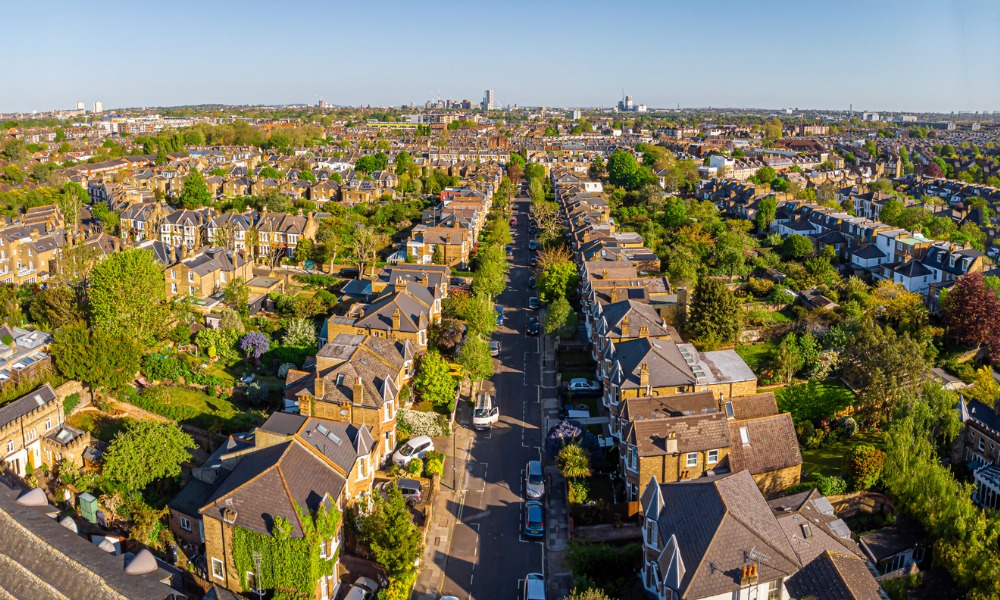
UK house price growth strengthened in March as the market rebounded after losing stream at the start of the year.
According to the latest Nationwide House Price Index, annual growth in house prices rose to 2.2% in March, up from 1% in February. Prices increased by 0.9% month on month from £273,176 to £277,186.

“The pickup in house price growth suggests that the market had regained momentum after the slowdown recorded around the turn of the year,” said Robert Gardner, chief economist at Nationwide. “However, the sharp rise in global energy prices in response to developments in the Middle East represents a significant shock to the global economy, clouding the outlook.
“In the near term, UK economic growth is likely to be slower and inflation higher than previously expected, although ultimately the impact will depend on the duration of the shock as well as the policy response. The outlook for interest rates is particularly uncertain and dependent on whether the demand or supply side of the economy is more adversely affected.”
 Gardner (pictured right) also pointed out that financial market expectations for the future path of Bank Rate had shifted dramatically. Towards the end of March, three interest rate hikes were priced in over the next 12 months, compared to two rate cuts being anticipated before the strikes on Iran. This shift has resulted in a sharp rise in longer term interest rates or swap rates that underpin fixed rate mortgage pricing.
“If sustained, this could reverse some of the improvement in housing affordability that has taken place in recent years,” he said. “With consumer sentiment also likely to be dented by the uncertain outlook and the prospect of rising energy costs, housing market activity is likely to soften.”

“The vast majority of existing mortgage holders are protected from the immediate impact of higher interest rates, with around 90% on fixed rate mortgages,” Gardner added. “Also, while swap rates have risen markedly, to date the increase is much less pronounced than that seen in the aftermath of the pandemic. Indeed, they are still at levels prevailing in late 2023 to early 2024.”
Regions see modest annual house price growth
Nationwide’s regional indices, produced quarterly, showed that most parts of the UK recorded modest annual growth in Q1 2026 (the three months to March). Two of the 13 regions saw prices fall year on year: Outer South East (-0.7%) and East Anglia (-0.4%). Three more regions registered annual growth of less than 1%: West Midlands, East Midlands and the South West.
Northern Ireland continued to lead, with prices up 9.5% over the year. Nationwide said this compared with 1.5% for the UK as a whole in Q1, and 3.3% in the next strongest region, the North West. Scotland recorded annual growth of 3.0% in Q1, up from 1.9% in Q4 2025, while Wales rose 2.7% year on year.

In England, annual growth eased to 0.9% from 1.2% in Q4. Prices across Northern England rose 1.5% year on year, with the North West the strongest-performing English region at 3.3%.
Southern England was steady at 0.6%, with London the strongest southern region at 1.7%, up from 0.7% in the previous quarter. East Anglia and the Outer South East posted small annual declines.
By property type, detached homes recorded the largest annual increase at 2.4%. Terraced homes rose 2.1%, semi-detached properties were up 1.5%, and flats fell 0.5% year on year.
Nationwide said flats have lagged over the longer term: since the start of 2020, typical flat prices have increased 15%, compared with a 30% rise for detached houses, which it linked in part to weaker performance in London, where flats make up a larger share of the housing stock.
Want to be regularly updated with mortgage news and features? Get exclusive interviews, breaking news, and industry events in your inbox – subscribe to our FREE daily newsletter. You can also follow us on Facebook, X (formerly Twitter), and LinkedIn.


